



In October, we celebrated our 126th birthday.
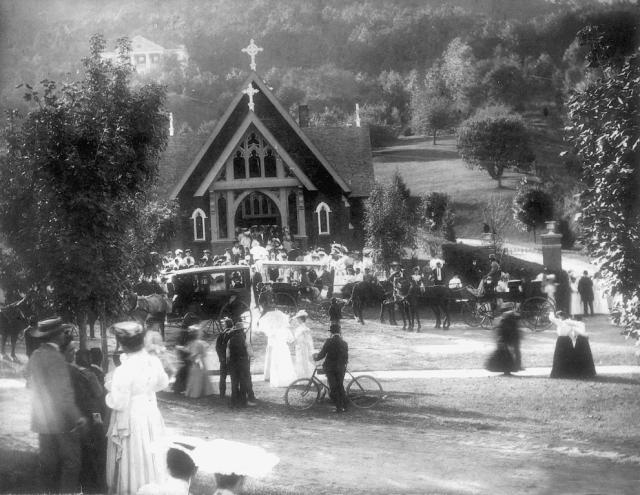
The St. Luke's parish was officially organized in 1899, and its edifice was built that same year on land donated by the Hot Springs Company, at a total cost of $6,000. The rectory, next door, was built in 1914 and enlarged in 1931.
The tube-chimes, which are heard throughout Hot Springs on Sunday mornings, were made by J. C. Deagan, Inc. They were given by Mrs. Melville Edgar Ingalls in 1924 in memory of her husband, former President of Virginia Hot Springs Company. The chimes are played on a keyboard beside the organ.
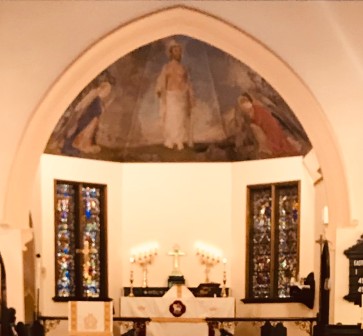
The Resurrection Scene over the altar was painted by Christine Herter Kendall in 1933. It had hardly been completed when the church was severely damaged by fire on January 29, 1933. Professor and Mrs. Kendall peeled the paintings off the sanctuary ceilings, took them to her studio and restored them--even concealing the wound given the angel on the left, who suffered a grievous blow from a fireman’s axe.
The present organ, the third in the Church’s history, was built by the M.P. Moller Company and dedicated in 1959. It was given by Mrs. John Hughson Hirsh in memory of her husband, a former organist of St. Luke’s.
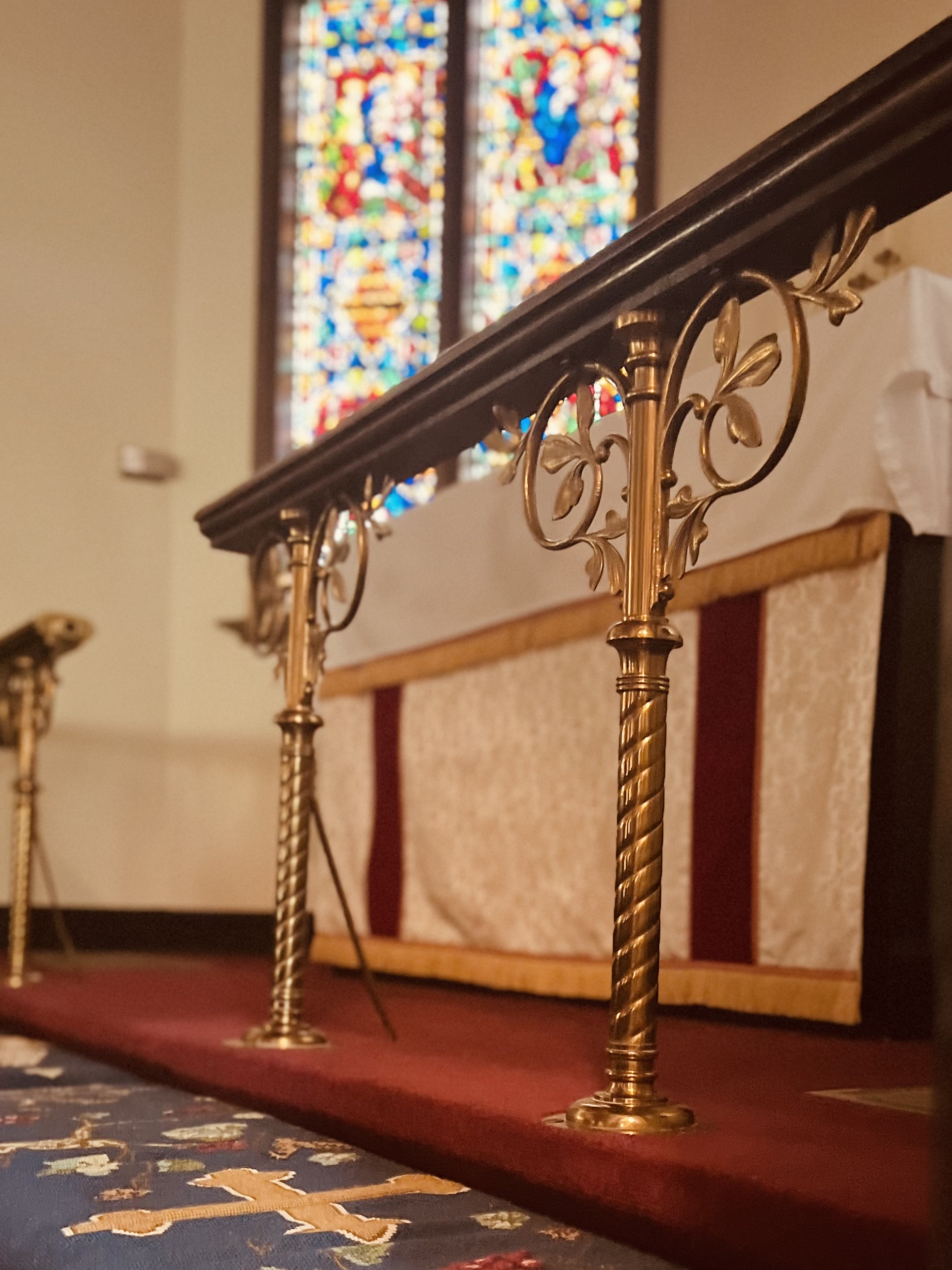
The two magnificent chancel windows were given in 1928 in memory of Lanier Dunn and a daughter, also Lanier Dunn, by Mrs. Dunn and Mrs. George Cole Scott. The one on the right side was melted by the fire, but was restored by its makers, James Powell & Son of London, England.
St. Luke’s has also been blessed by continuing benefactions from its longtime parishioner, the philanthropist Letitia Pate Evans, whose home, Malvern Hall, stands at the top of the nearby hill.
Saint Luke was a physician and a painter, and is reputed to have conceived and “written” the first icon. Traditionally, icons are not painted but are written on wood, the colors are specific and have symbolic meanings, and all true icons are considered very much the same as prayers. Our primary icon is a replica of the famous Madonna and Child, which was originally written in the first century by Luke, reputed to be the first, and considered sacred. The original may be in a Russian museum, but that may not be accurate. The flanking icons are of Luke, one the physician and the other the writer. The three are mounted on birch veneer with the traditional red border, and they have mounted as a triptych over the back door of the church. The history and tradition of icons is rich and detailed.
The congregation maintains a vibrant ministry of worship, fellowship, and outreach to needs far and near. We invite you to join us any Sunday at 11 a.m.